Borrowed Time
My Life Before the Tsunami and the History That Shaped Indonesia—and the World.

Before releasing Part 2 of my story, I thought it would be appropriate to write about my childhood and what life was like before the tsunami.
I was born in my grandparents’ house in eastern Aceh. Because my mother was the first of eight children, and the first to get married and have babies, every new arrival was a celebration for the entire family.
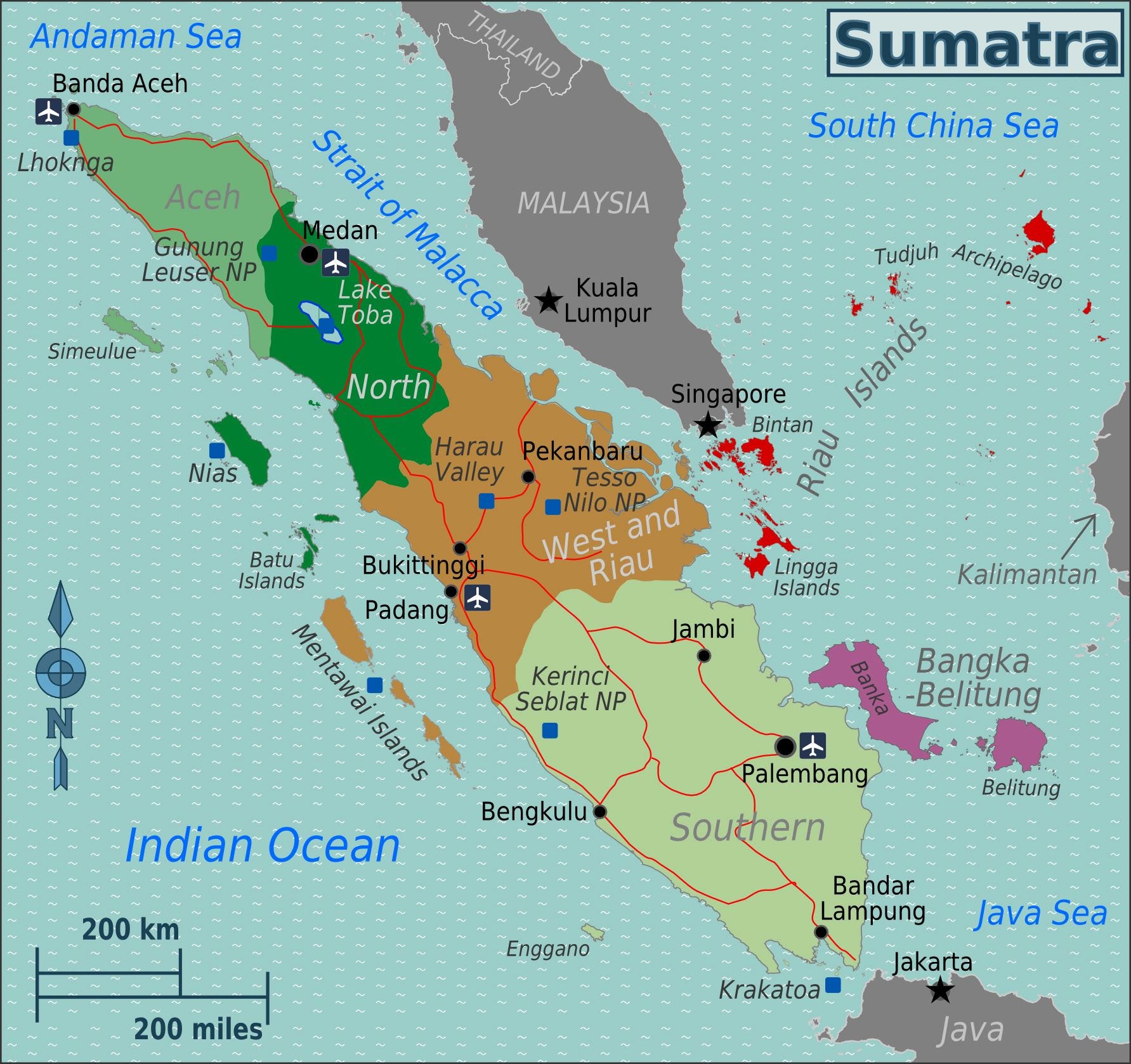
After giving birth, my mother would usually leave to rejoin my father, who worked in Palembang, another province in southern Sumatra. When she delivered me, she already had a five-year-old and a four-year-old whom she had left with my father. They had fallen ill, so she had to fly back as soon as she could. I was too young to travel, and because she suffered from hypogalactia (an insufficient milk supply) and wasn’t able to breastfeed, she left me with my grandparents. What was supposed to be a temporary arrangement lasted five years because my father’s transfer back to Aceh kept being delayed.
My father was a third-generation Indonesian of Yemeni descent. He left home while still in high school to live with relatives in Singapore for a better education. He later managed to put himself through engineering college in Germany, earning a diploma in civil engineering before returning to Indonesia to work as a drilling engineer for Exxon Mobil.
He was certainly an eligible bachelor, earning the approval of my very strict grandfather, a colonel in the Indonesian Army infantry. My grandfather was famous for showing off his collection of firearms whenever a young man came to court one of his daughters. It wasn’t a friendly invitation—it was a warning that said, if you dare.
My early childhood with my loving grandparents and my seven aunts and uncles gave me some of the happiest memories of my life. I was told I didn’t learn to walk until I was nearly two years old because nobody ever wanted to put me down. I was constantly passed from one pair of loving arms to another, each person wanting their turn to cuddle and spoil me.
Whenever I had disagreements with my friends, my grandfather would pull out our VHS and play a movie. We were the only family in the village who owned one. He would announce, “Anyone mean to my granddaughter doesn’t get to watch!” My friend, that’s how you bought friendships.
My medical bills probably consumed most of their money. I was a frequent visitor to the hospital—not because I was sick, but because every hiccup was treated as a medical emergency. And nobody could ever tell me no when it came to durian, the famously pungent fruit that people either love or hate. I’d eat far too much of it, develop a fever, and end up right back at the hospital.
Life in our little village in Eastern Aceh was wonderfully liberating. My grandfather was feared, while my grandmother—the gentlest soul I have ever known—was loved by everyone. And I mean everyone: strangers, fishermen, farmers, grocers, and even the traveling salesman who stopped by every so often with new pots and pans.
Many times, I would wander into the kitchen, only to find a stranger sitting at our dining table, eating a meal. I’d ask, “Who are you?”
My grandmother would quietly reply, “Shhh… he’s hungry.”
That was who my amazing grandmother was. If she saw someone who looked hungry, she fed them. If they needed clothes, she clothed them.
As an adult who has traveled far from home, much like my grandmother once did, I now understand how she built such a strong community around her. I finally understand where her boundless compassion came from.
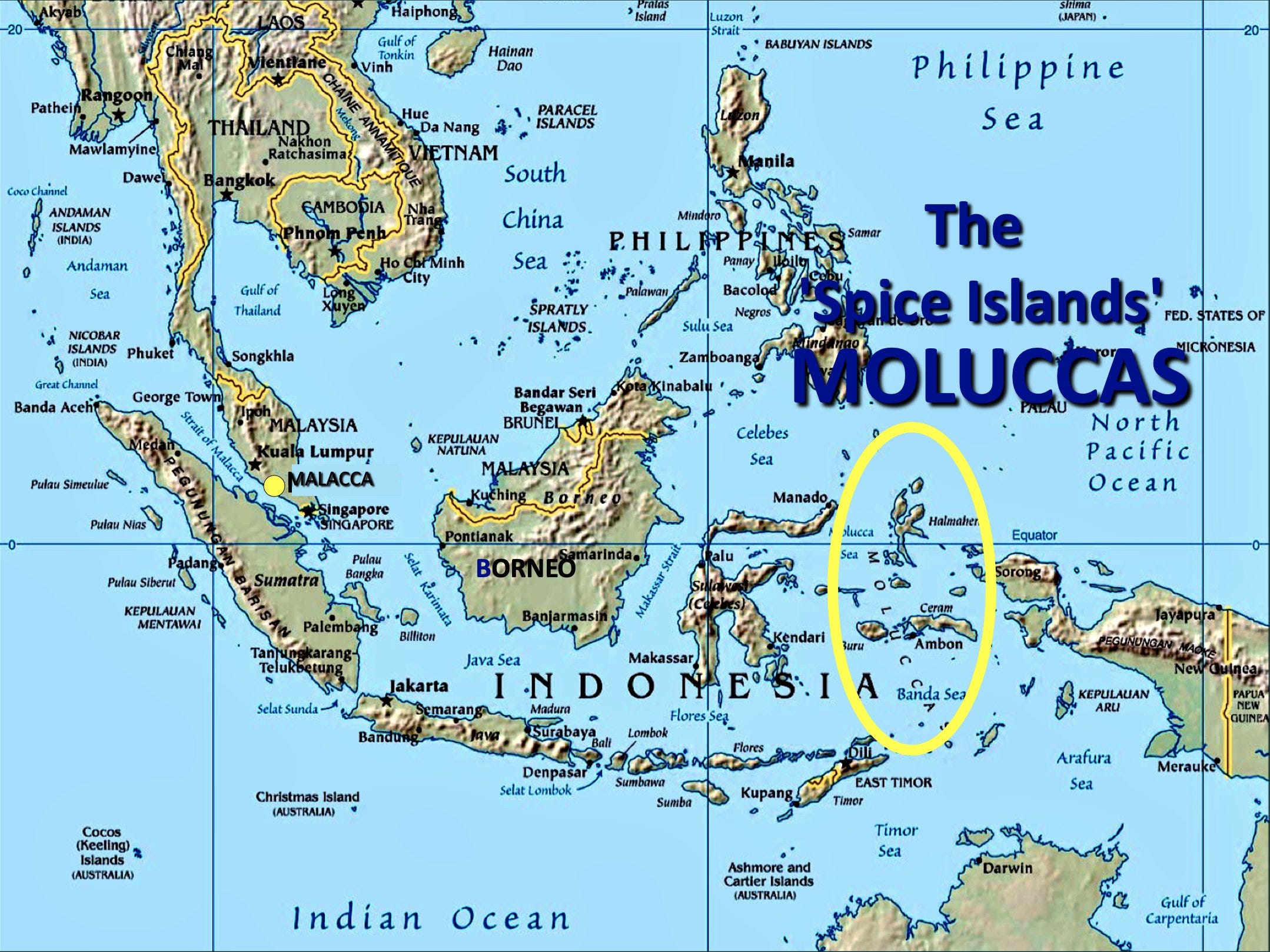
My grandmother was of Yemeni descent from a tribe called Assegaf, born in Banda Neira, a tiny, breathtaking island famous for its spices and crystal-clear waters in the Maluku Islands (the Moluccas) of eastern Indonesia.
Around 130 B.C., China’s Han Dynasty opened the Silk Road, connecting the Far East with the West. For roughly 1,500 years, its vast network of land and maritime trade routes linked East Asia with the Middle East and the Mediterranean.
Indonesia, then under the Srivijaya Kingdom, controlled the Strait of Malacca—the central hub for Chinese goods and precious spices such as nutmeg, cloves, and mace, all of which grew exclusively in the Maluku Islands.
In the 7th century, the Islamic Prophet Muhammad was married to Khadijah, a highly successful merchant who traded goods and spices throughout western Arabia, Syria, the Levant, Palestine, Iran, and Yemen. Their descendants established roots throughout those regions.
My grandmother’s family, descendants of the Prophet Muhammad, came from Yemen to the Maluku Islands to continue the Prophet’s trade network and spread his teachings. Within their tradition, it was customary for the Ahlul Bayt—the Prophet’s family—to marry within their own lineage.
My grandfather was also a descendant of the Prophet Muhammad, from a tribe called Alhabshi whose family traced its roots to Lebanon.
After Indonesia gained independence from colonial rule, my grandfather joined the Indonesian Army to fight against communism. He was stationed in Ambon, the capital of Maluku, where he met my grandmother. She followed him through war after war, endured life in military conflict zones, lost two babies, suffered multiple miscarriages, and ultimately built a family thousands of miles away from the island where she was born.
My grandmother embodied grace and fortitude. I cannot write about her without tears, for I don’t have the words to do justice to the extraordinary woman she was.
During the Age of Discovery (1418–1620), many European explorers searched for the Spice Islands because spices were among the most valuable commodities on Earth—worth more than their weight in gold. Whoever controlled the spice trade could finance the world’s most powerful armies.
Circumnavigators such as Vasco da Gama, Christopher Columbus—who famously got lost and found America instead in his search for my grandmother’s birthplace, the Moluccas—and the Spaniard Ferdinand Magellan, who discovered the passage connecting the Atlantic and Pacific Oceans, opened the way for European powers such as England and the Netherlands to colonize Asia.
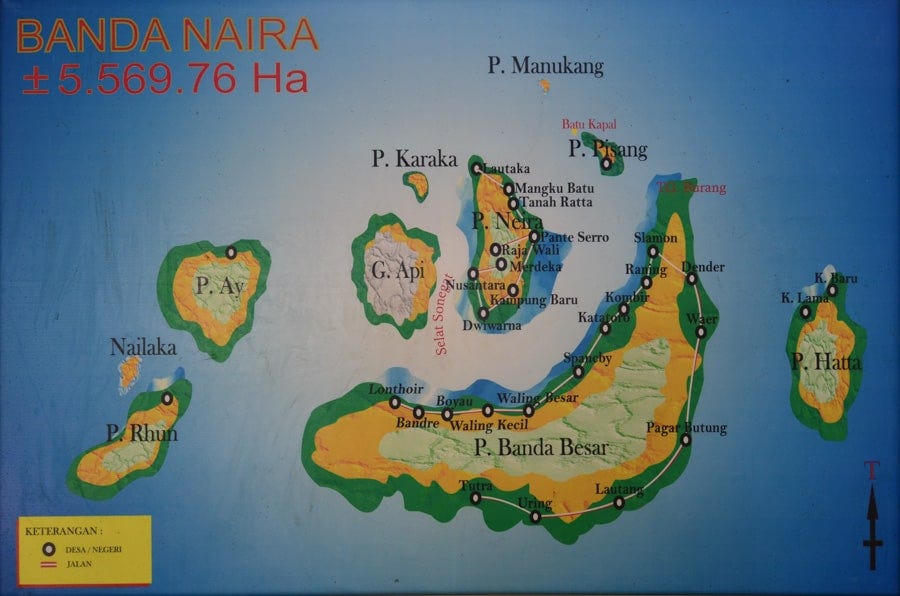
In 1667, England and the Dutch signed the Treaty of Breda, exchanging several of their colonial possessions. One of the most remarkable trades in history was the exchange of the tiny island of Run (Rhun), where my grandmother was born in the Maluku Islands, for Manhattan. New Amsterdam would later become New York.
For many years, the Dutch fiercely protected their monopoly over nutmeg and cloves, destroying anyone who attempted to cultivate the spices outside the Maluku Islands. My grandma was born during the Dutch occupation.
As an American citizen today, I find this piece of history absolutely fascinating.
My formative years were filled with an abundance of unconditional love, but very little structure. My mother worried that I would grow up to be a hopelessly spoiled child. When my father was finally transferred to North Aceh, I was reunited with my parents and siblings after five years apart.
The adjustment wasn’t easy.
Under my mother’s strong will and military-like discipline, I slowly learned responsibility, perseverance, and the importance of taking my future seriously. Looking back, I owe much of my success—including graduating from college—to her unwavering determination.
North Aceh has long been known for its rich oil and natural gas reserves. As early as 1897, American companies such as Mobil Oil—now Exxon Mobil—had invested in Indonesia’s petroleum industry, primarily around Palembang in South Sumatra, where my father had once worked.
Following Indonesia’s independence, the nation’s founding president, Soekarno, adopted an anti-imperialist policy that strictly limited foreign investment. His increasingly confrontational foreign policy, particularly toward Malaysia, created deep divisions within both his military and political cabinet. As tensions escalated, the Indonesian Communist Party gained greater influence.
Then came the September 30, 1965 movement.
The event, known as G30S/PKI, changed the course of Indonesian history. General Soeharto, with support from the CIA and MI6, led a military takeover and executed many of Soekarno’s loyal generals, accusing them of being communist sympathizers. Widespread purges followed. Soekarno was placed under house arrest until he died in 1970, while Soeharto assumed the presidency, beginning a regime that lasted three decades and received substantial backing from the United States throughout his 31-year dictatorship.
For at least twenty-five years afterward, the government required every Indonesian family to watch the annual state television broadcast of the reenactment of the “supposed communist” execution on each September 30. It was the only program broadcast that night, instilling fear and suspicion among people. In one year, Soeharto killed nearly 1 million people.
The scenes were graphic and unforgettable.
Every year, I cried watching the heartbreaking execution of Ade Irma Suryani, the five-year-old daughter of General A.H. Nasution. Long before I understood politics, those images had already taught me what violence looked like.
Only minutes after Soeharto assumed power in 1968, Exxon Mobil expanded its operations to the shores of North Aceh, opening two major onshore production blocks: Mobil Oil and PT Arun.
In 1974, another American company, Bechtel, built much of the pipeline infrastructure supporting Aceh’s oil and gas industry. My father was involved in that work, and eventually, in 1986, it allowed our entire family to relocate to North Aceh.
Despite Aceh's enormous contributions to Indonesia’s independence and economic growth, many Acehnese felt they received very little in return. Under Soeharto, much of the province’s wealth flowed to the central government and its political elites, while many local communities remained poor and underserved.
Unequal employment opportunities and the uneven distribution of wealth created a deep economic divide.
As a child, I remember staring at the tall fences surrounding the expatriate compounds. Inside were beautiful homes and neatly landscaped neighborhoods. Yet just beyond those fences stood villages marked by heartbreaking poverty.
I couldn’t understand how those two worlds could exist side by side.
After decades of frustration and perceived injustice, many Acehnese supported a separatist movement seeking independence from Indonesia. In response, Soeharto declared Aceh a Military Operations Area (DOM) in 1989 and deployed thousands of troops throughout the province.
From that moment on, my childhood was no longer defined only by family and love.
It was also shaped by war.
My father left to work in Texas at an Offshore Joint Gas Company out of fear that he would suffer the same fate as some of his cousins and friends, who had been kidnapped, tortured, and killed. My mother was left to raise four children on her own.
She received frequent visits from military personnel questioning where her loyalties lay.
“My father is a retired infantry colonel,” she would reply. “Where do you think I stand?”
She also received visits from the insurgents, who asked her the very same question.
She would simply answer, “Where do you think my husband is?”
Remember this: you can never outsmart a fiercely protective mother.
In the year 2000, I was a junior in college. I boarded a bus home to visit my parents, who lived about six hours from my campus.
After I took my seat, I had a small disagreement with another young woman over the window seat. Coincidentally, she had exactly the same name as I did.
I have always preferred the window seat because I can lean my head against the glass and sleep during long journeys. She had boarded first, so although I wasn’t happy about it, I reluctantly gave up the seat.
A few hours into the trip, our bus drove into the middle of a firefight between the military and the insurgents.
The young woman sitting beside me—the one who had taken the window seat—was shot in the head.
She collapsed onto me, bleeding into my lap.
For months afterward, friends and acquaintances who hadn’t seen me believed I was the one who had died.
For many years, I could barely speak about what had happened. I tried to erase it from my memory, pretending it had never occurred. But burying it only left a deeper wound instead of allowing it to heal.
Eventually, I had to accept what had happened.
It wasn’t my fault that she took the window seat.
Although I remain profoundly grateful that my life was spared, I have carried a strange feeling with me ever since—that the life I am living now is borrowed time.